Escrow
The EscrowVault smart contract is where USDC actually sits during a transaction's COMMITTED → DELIVERED → SETTLED window. The ACTPKernel kernel calls EscrowVault.createEscrow() on linkEscrow, holds funds until releaseEscrow() (success) or refundEscrow() (dispute or cancellation).
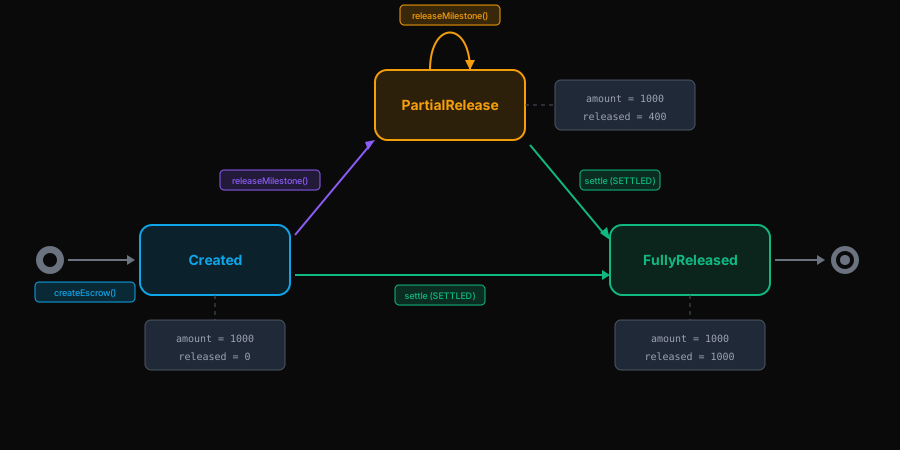
EscrowVault is the only contract that holds user funds. Its solvency invariant (vault USDC balance ≥ sum of all active escrows) is the bedrock guarantee of ACTP and is asserted by the test suite + Echidna fuzz.

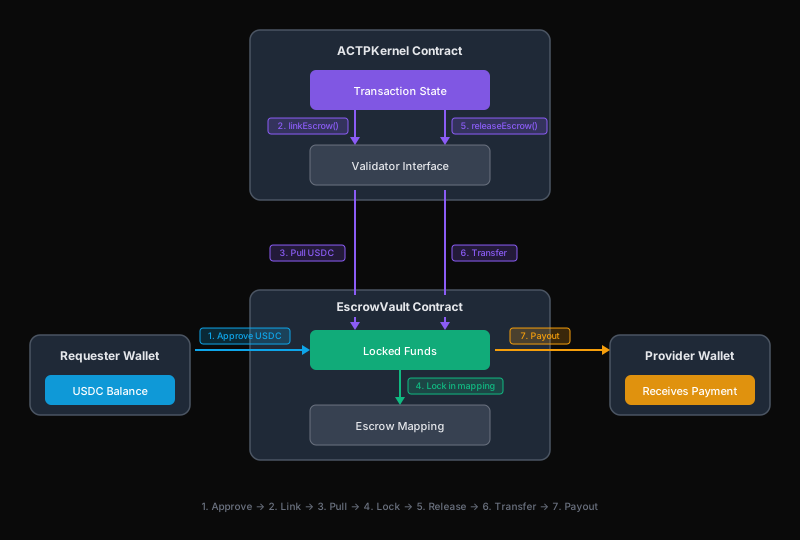
Lifecycle
linkEscrow(txId, amount)
   │
   └─ EscrowVault.createEscrow(txId, requester, provider, amount)
      • requester USDC.transferFrom → vault
      • escrow record stored with state machine state machine ref
      • emits EscrowCreated(txId, amount)

transitionState(txId, SETTLED) | releaseEscrow(txId)
   │
   └─ EscrowVault.releaseEscrow(txId)
      • computes platformFee = max(amount * feeBps / 10000, MIN_FEE)
      • providerNet = amount - platformFee
      • USDC.transfer(provider, providerNet)
      • USDC.transfer(feeRecipient, platformFee)
      • emits EscrowReleased(txId, providerNet, platformFee)

transitionState(txId, DISPUTED)
   │
   └─ EscrowVault.lockForDispute(txId, disputer)
      • disputer USDC.transferFrom (bond) → vault
      • escrow locked until mediator resolution
      • emits EscrowDisputed(txId, disputer, bondAmount)
AIP-14 dispute bond
A disputer (requester or provider) must post a $1 USDC minimum bond when transitioning a tx to DISPUTED. The bond returns per fault attribution after mediator resolution:
| Outcome | Bond returned to |
|---|---|
| Mediator sides with disputer | Disputer (bond returned) |
| Mediator sides against disputer | Counterparty (bond awarded to other side) |
| Mediator returns no decision | Vault treasury (bond burned) |
Bond amount = max(amount * disputeBondBps / 10000, MIN_DISPUTE_BOND).
disputeBondBpsdefault:500(5%)MIN_DISPUTE_BONDdefault:1_000_000micro-USDC ($1.00)
Enforced in _payoutProviderAmount since the V3 mainnet redeploy on 2026-05-19.
INV-30: per-transaction locked-bps
disputeBondBpsLocked is captured at transaction creation time and immutable thereafter. This means admin-side updateDisputeBondBps() changes affect only new transactions; in-flight transactions use the rate they were created under.
Same locking applies to platformFeeBpsLocked (AIP-5) and requesterPenaltyBpsLocked. Three fields total, all per-transaction, all immutable post-creation.
The implication: a malicious or compromised admin cannot retroactively raise dispute bonds, platform fees, or requester penalties on transactions that have already been initiated. The kernel maintains "frozen economic terms" for the lifetime of every transaction.
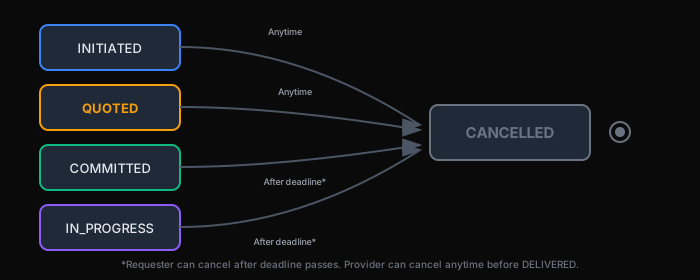
Refund paths
| From state | Refund |
|---|---|
INITIATED → CANCELLED | No funds locked yet; no refund needed |
QUOTED → CANCELLED | No funds locked yet (escrow attaches at COMMITTED) |
COMMITTED → CANCELLED | Full amount refunded to requester |
IN_PROGRESS → CANCELLED | Amount minus requesterPenaltyBpsLocked refunded; penalty awarded to provider for partial work |
DELIVERED → DISPUTED → mediator → CANCELLED | Per mediator decision (full / partial / penalty split) |
The requester-penalty BPS exists to prevent griefing: cancellation after the provider has begun work shouldn't be free.
See also
- State machine: the DAG that drives escrow transitions
- Fee model:
platformFeeBps+MIN_FEE+ 5% cap - Dispute flow recipe: concrete walkthrough of
DELIVERED → DISPUTED → SETTLED/CANCELLED - Contracts: EscrowVault on mainnet
- Contracts: EscrowVault on sepolia