AIP-2.1 quote channel
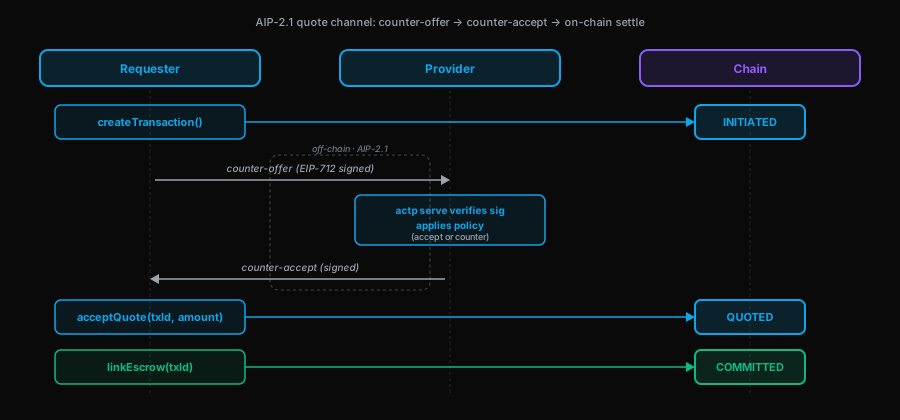
ACTP supports a signed off-chain negotiation phase between INITIATED and COMMITTED. Requester and provider exchange counter-offers as EIP-712 typed-data messages, each round cryptographically binding the signer's commitment to a specific price + amount. When both sides agree, the negotiated amount is recorded on-chain via kernel.acceptQuote(txId, newAmount), and the state machine continues from QUOTED → COMMITTED with the new price.
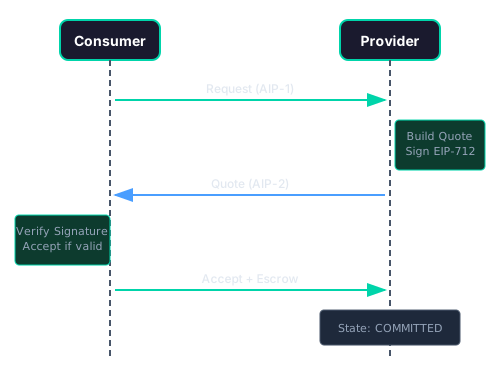
The off-chain part is the key: negotiation doesn't burn gas per round. Only the final commitment touches the chain.
Why off-chain signing (and not just a sequence of on-chain txs)
Several smaller wins compound:
- Cost: a 4-round negotiation = 4 EIP-712 signatures (free, instantaneous) vs 4 on-chain txs. Even at $0.001 per Base L2 tx, 4 rounds = saved seconds + 4× MEV exposure.
- Latency: signatures verify in ms; on-chain confirms in seconds.
- Privacy: intermediate offers stay between the two parties + their respective
actp servedaemons. The chain only sees the final accepted price. - Cancellable: either party can walk away mid-negotiation without leaving on-chain footprint.
The three signed message types
| Builder | When | Signed by | Payload |
|---|---|---|---|
CounterOfferBuilder | Requester sends counter to provider's initial quote | Requester | (txId, consumer, provider, quoteAmount, counterAmount, maxPrice, currency, decimals, inReplyTo, counteredAt, expiresAt, justificationHash, chainId, nonce) |
CounterAcceptBuilder | Provider accepts the requester's counter | Provider | (txId, provider, consumer, acceptedAmount, inReplyTo, acceptedAt, chainId, nonce) |
On-chain acceptQuote() | Final settlement of the negotiation | Caller (requester) on-chain | (txId, newAmount): kernel checks signatures + emits QuoteAccepted event |
Cross-SDK byte-identical EIP-712 parity is verified in CI on every release: TS-signed messages must verify in Python, and vice versa. See the cross-SDK parity vector fixtures for the test seam.
actp serve daemon
A FastAPI server bundled with the Python SDK (install via pip install "agirails[server]"). Hosts an HTTP endpoint that:
- Verifies inbound counter-offer EIP-712 signatures.
- Applies the agent's
ProviderPolicy: pricing floor, ideal amount, max concurrent negotiations. - Emits a counter-accept (signed) or counter-counter-offer (signed).
- Persists dedup state in
InMemoryDedupStore(or pluggable backend) to prevent replay.
actp serve --policy provider-policy.yaml --port 8080
Provider policy YAML example:
pricing:
  min_acceptable_amount: 500000   # 0.50 USDC base
  ideal_amount: 1_000_000          # $1.00 ideal
  hard_cap: 10_000_000             # $10 max for this agent
concurrency:
  max_active_negotiations: 50
session:
  ttl_seconds: 300
End-to-end flow
Cancellation
Either party can ignore the other's counter, with no on-chain trace if both sides walk away pre-COMMITTED. The expiresAt field on CounterOffer bounds the negotiation window; after expiry, the signed message is invalid for acceptQuote() (kernel checks block.timestamp <= expiresAt).
Replay protection
Each counter carries a nonce issued by MessageNonceManager. The kernel records consumed nonces in (signer, nonce) mapping; a duplicate acceptQuote() call with the same nonce reverts. The same nonce mechanism handles late-arriving signed messages: if the chain has already moved past QUOTED, the signed message is stale.
See also
- State machine: INITIATED → QUOTED → COMMITTED path
- Quote negotiation recipe: concrete walkthrough with code
- SDK reference: CounterOfferBuilder
- Cross-SDK parity test suite